19/09/2026 Nicosia 31°C EUR/USD 1.08
Cyprus Pulse.
About us Contact & advertise Privacy policy Terms of use Cookie policy
Section

Travel & Culture

Beaches, mountains, mosaics and meze: ten thousand years of island, one guide at a time.

Cyprus rewards the traveller who looks twice. The first look is the one the brochures sell, and it is not false: reliably sunny summers, warm sea into November, and sandy bays like Nissi and Fig Tree Bay that fill with families from across Europe. But stop there and you miss most of the island. Forty minutes above the coast, the Troodos massif holds painted Byzantine churches under UNESCO protection, vineyards that have made wine for millennia, and stone villages where the evening air actually turns cool in August.

History here is not fenced off in museums; it is underfoot. In Paphos, an entire quarter of Roman villa floors, the famous mosaics, lies within a coastal archaeological park you can wander for a morning. Kourion's amphitheatre still stages summer performances above the sea. Aphrodite's Rock rises from the surf on the road between Paphos and Limassol, attached to a legend the island has traded on since antiquity. And in Nicosia, the last divided capital in Europe, you can walk a Venetian-walled old town, cross the Green Line on foot at Ledra Street, and read five centuries of layered rule in a single afternoon. This desk collects our travel and culture writing in one place: where to swim, when to come, what to eat and how to understand what you are looking at. The guides below are evergreen by design, written for the visitor planning a first trip, the resident hosting relatives on their fourth, and everyone who has stood before a taverna menu wondering what sheftalia actually is. Distances are short, roads are good, and the reward for mild curiosity is enormous.

Lead feature

A guide to Cyprus beaches, from Nissi Bay to the wild Akamas

The island holds one of Europe's largest collections of Blue Flag beaches in a remarkably small space: party bays, family shallows, sea-cave coves and turtle-nesting sands. Where to find each kind, and when.

[STAFF WRITER] · 11 min read

More from the Travel desk

Beaches: an honest map of the coastline

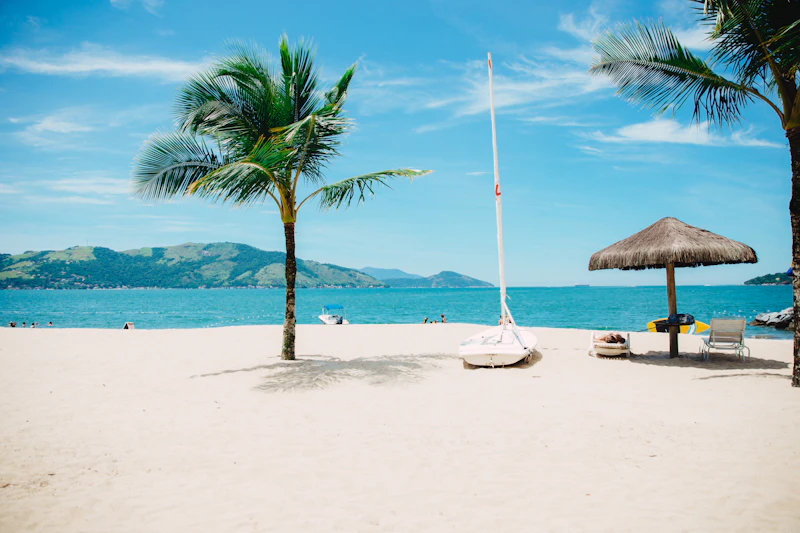
The island's beach reputation was built in the southeast, and the southeast still delivers. Nissi Bay in Ayia Napa is the poster child: shallow, bright turquoise water over pale sand, a sandbar you can wade along, and a summer soundtrack from the beach bars. Fig Tree Bay in Protaras offers a calmer version of the same postcard, which is why families colonise it from May onwards. The whole Famagusta coast is managed intensively, with lifeguards, loungers and water sports through the season, and it holds a dense cluster of the island's many Blue Flag awards.

Move west and the character changes with the geology. Larnaca's town beaches are convenient rather than spectacular, backed by the palm-lined Finikoudes promenade. Limassol's long urban seafront is greyer sand but superbly equipped, a city amenity as much as a resort. Between Limassol and Paphos the coast turns rocky and dramatic; Aphrodite's Rock is a photo stop and a swim for the confident rather than a lounging beach, and the pebble coves around it reward water shoes. Paphos itself mixes small town beaches with the standout of Coral Bay, the west's best family sand.

Then there is the wild north-west. The Akamas peninsula holds the beaches people mean when they say the island still has secrets: Lara Bay, reached by rough track, where green and loggerhead turtles nest under protection and development is banned; and the famous blue lagoon near Latchi, at its best from a boat in the morning before the excursion fleet arrives. Practical rules travel well here: the deepest summer heat calls for morning and late-afternoon swimming, lifeguarded beaches fly standard flag warnings, and the sea stays warm enough for comfortable swimming well into autumn, one of the longest bathing seasons in the Mediterranean.

The Troodos: the island's other altitude

Nothing recalibrates a visitor's idea of Cyprus faster than the drive up. In under an hour from the Limassol coast the temperature drops, the air smells of pine, and the road begins to switchback through terraced vineyards toward Mount Olympus, the island's highest point. In winter it carries snow and a small ski operation, a fact that reliably astonishes first-time visitors; in summer it is where Cypriots have always gone to breathe.

The cultural treasure of the range is its churches. Ten painted Byzantine churches and monasteries of the Troodos region are inscribed on the UNESCO World Heritage list, modest stone barns from the outside, blazing with medieval frescoes within. Kykkos Monastery, the island's richest and most famous, adds gold and mosaic on a grander scale. Around them spreads village Cyprus: Kakopetria's preserved old quarter above a rushing stream, Omodos and its wine-country neighbours around a cobbled monastery square, Lefkara where women have made lace by the doorstep for centuries, and Platres, the old colonial hill station that still fills with escapees from the summer coast.

This is also the island's outdoor gym. The national forest park is threaded with marked trails, from the gentle Caledonia path along a waterfall stream to the Artemis loop circling the summit through black pine. Wine routes link boutique wineries reviving indigenous grapes like xynisteri and maratheftiki, with Commandaria, by many accounts the world's oldest named wine still in production, made in a band of villages on the southern slopes. Come in spring for blossom and rushing water, autumn for the grape harvest and golden light, and any season with a jumper in the car: the mountain evenings mean it.

Ancient Cyprus: reading ten millennia in an afternoon

Cyprus has been continuously inhabited for roughly ten thousand years, and its position between three continents made it everyone's stepping stone: Mycenaean Greeks, Phoenicians, Assyrians, Egyptians, Persians, Romans, Byzantines, Crusaders, Venetians, Ottomans and the British all left layers. The result is an island where a single day can run from a Neolithic village to a Gothic cathedral wearing a minaret.

Two sites anchor any itinerary. The Paphos Archaeological Park, part of a UNESCO World Heritage listing that covers the wider Paphos area, preserves the floors of grand Roman villas whose mosaics, scenes of Dionysos, Theseus and the myths of wine and love, rank with the finest in the Mediterranean; wooden walkways let you study them from above with the sea glittering behind. Kourion, west of Limassol, answers with drama: a Greco-Roman theatre restored for summer performances, bath-house mosaics and a clifftop forum looking straight down onto the beach where its citizens once swam. Between them, the Sanctuary of Aphrodite at Kouklia marks the cult centre that made the island synonymous with the goddess; her legendary birthplace, the sea stack of Petra tou Romiou, is a short drive along the coast.

The medieval and modern layers deserve their own afternoon. Kolossi Castle tells the Crusader story in one keep; Larnaca's church of Saint Lazarus holds one of Christianity's oldest continuous traditions; and Nicosia's walled city compresses Venetian fortification, Ottoman neighbourhoods, British colonial administration and the Green Line into a walkable square mile. The Cyprus Museum in Nicosia holds the finest portable finds. Entry fees across state-run sites are modest, mornings beat the heat, and the golden rule of Mediterranean archaeology applies everywhere: bring water, and let the stones take the time they ask for.

Food: the meze, the grill and the cheese that conquered Europe

Cypriot food is Greek-adjacent, Levantine-influenced and stubbornly its own. The signature format is the meze: not a dish but a procession, small plates arriving in waves from dips and village salad through grilled halloumi, sheftalia (herbed pork rissoles wrapped in caul), keftedes, souvlaki and slow stews like afelia and tavas, until the table physically runs out of room. The unwritten rules: pace yourself through the first wave, never fill up on bread, and accept that the kitchen, not the menu, decides the ending. A fish meze by a harbour swaps the pork for whatever the boats landed.

Sunday belongs to souvla, the big-cut cousin of souvlaki: generous pieces of pork or lamb turned slowly on long skewers over charcoal, a ritual of family gardens and beach barbecue areas as much as restaurants. And everywhere there is halloumi, the brined sheep-and-goat cheese that squeaks fresh and turns golden on the grill. Its EU protected designation of origin, hard-won and fiercely defended, ties the name to the island and its traditional recipe, and exports have made it the food story every visitor already knows before landing.

Beyond the greatest hits, seek out trahanas soup in the mountains in winter, koupepia (stuffed vine leaves) made by someone's grandmother, loukoumades drenched in syrup at a festival stall, and the slow ritual of a Cyprus coffee, ordered sketos, metrios or glykos by sweetness and never rushed. The island drinks its own wine with increasing pride, from crisp xynisteri whites to the ancient sweetness of Commandaria, and finishes weddings and arguments alike with zivania, the grape spirit that doubles as folk medicine. Eat where the menu is short, the tables are full of Cypriots and the day's specials are spoken rather than printed; that rule alone outperforms any listicle.

Seasons: when to come for what

The travel-agency version of Cyprus has one season, summer, and it is true that July and August deliver guaranteed sun, the warmest sea and the fullest calendar of beach life. They are also the hottest and busiest months, with inland afternoons that regularly demand a siesta. Travellers with flexible dates increasingly aim for the shoulders: May and June for long days and a fresh landscape, September and October for a sea still warm from summer with the crowds thinning by the week.

The island's quiet achievement is what happens outside those months. Spring, from February's almond blossom through April's carpet of wildflowers, is the hiker's and cyclist's season, cool enough for the Akamas trails and the Troodos loops that summer makes punishing. Winter on the coast means mild, often sunny days that northern Europeans would call spring, while the mountaintops take enough snow for a short ski season on Mount Olympus, allowing the island's favourite boast: sea and slopes in a single day, occasionally even true. Autumn brings the wine harvest, village festivals and the best light of the year for photographers.

The cultural calendar follows the same rhythm. Limassol's Carnival fills ten days before Lent with parades and costumes; Orthodox Easter, the island's biggest feast, turns Saturday midnight into fireworks and Sunday into a national barbecue; Kataklysmos, the Flood festival unique in the Orthodox world, brings seaside games and concerts in early summer; and September's wine festival in Limassol honours the oldest industry the island has. Around them, every village keeps its saint's day panigiri, part church feast, part funfair, and wholly worth a detour. In short: there is no wrong season, only wrong packing.

Planning by season

What each season does best
Season Weather feel Best for Watch out for
Spring (Mar to May) Mild, green, fresh evenings Hiking, wildflowers, archaeology, Easter feasts Sea still cool early on
Summer (Jun to Aug) Hot and dry, warmest sea Beach life, festivals, mountain evenings Peak heat, peak crowds, peak prices
Autumn (Sep to Nov) Warm sea, softening heat Swimming into November, wine harvest Occasional first rains late on
Winter (Dec to Feb) Mild coast, snow on Troodos peaks City breaks, walking, short ski season Shorter days, some resort closures

Frequently asked questions

For a classic beach trip, May, June, September and October hit the balance of warm sea and bearable heat. July and August guarantee sunshine at the price of crowds and peak temperatures. For hiking, archaeology and villages, spring is unbeatable, and coastal winters are mild enough for walking holidays.

If your plans go beyond one resort, yes. Intercity buses link the main towns cheaply and city buses cover the basics, but there is no railway, and the mountain villages, painted churches and Akamas beaches effectively require wheels. Roads are good, signage is bilingual, and driving is on the left, a legacy of the British era.

It spans the range. Beach-bar cocktails on the Limassol or Ayia Napa seafront price like any European hotspot, while a village taverna lunch, a state museum ticket or an intercity bus fare remain genuine bargains. Eating and staying where locals do, especially inland, stretches a budget dramatically.

Easily; that combination is the island's best trick. The Troodos foothills start within an hour of the Limassol and Paphos coasts, so a morning swim and an afternoon among vineyards and frescoed churches is an ordinary day, not a logistical feat. In winter the same drive can genuinely run from beach walk to snowline.

A shortlist that survives all arguments: the Paphos mosaics, one painted Troodos church, sunset at Aphrodite's Rock, a full fish meze by a harbour, the walk across Nicosia's Ledra Street crossing, and one morning swim at an Akamas or Protaras bay before the crowds arrive. Everything else is a happy bonus.

The Pulse Briefing

One email every weekday morning: the stories shaping Cyprus, explained in plain English. Free, no spam, unsubscribe whenever you like.